

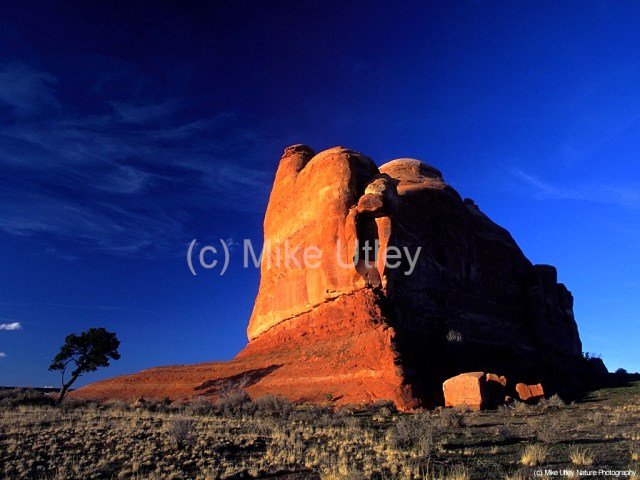
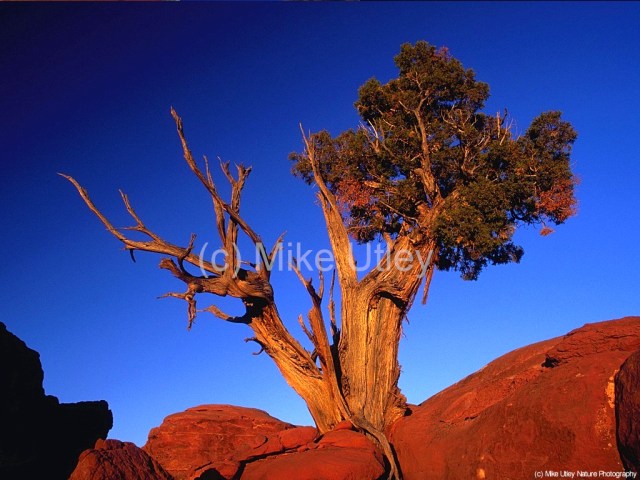
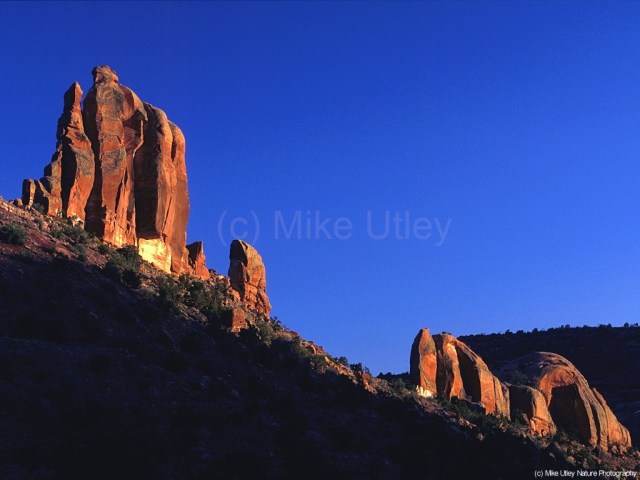
Lisbon Valley is a rather nondescript region in southeast Utah about an hour from the farm on which I was raised, not far from Canyonlands and Arches National Parks. There are no bottomless canyons cutting across the landscape here, no fragile arches standing sentinel over the sage and pinyon and juniper. It’s an out-of-the-way, forgotten place used mainly by ranchers for cattle grazing, and desecrated by a sprawling copper mine. However, it’s an area of special note to me and I spent many afternoons and evenings photographing this place before the copper mine brought its ugly open pit, pollution and truck traffic and destroyed its natural beauty.
This image from the late 1990s is what I call an intimate landscape. It focuses not on grand vistas, but rather a smaller, secluded view, one within arm’s reach. I was fascinated by the contrast between the two adjacent boulders in the foreground, how the doughiness of one appears so starkly different from the smooth, lichen-encrusted texture of the other—an almost surreal juxtaposition. The evening light was a glorious salmon hue with a delicate intensity, a softness often found in desert sunsets.
The thing about these unremarkable locales is that very few people, if any, have ever set foot in much of these areas. People flock to Canyonlands and Arches National Parks for good reason, of course—to be mind-blown by the outrageous showmanship of nature’s rugged chisel and brush, and never even notice these lesser-known places where desert life plays out in secret and beauty on a different scale is on hidden display. I left many footprints in the sands of Lisbon Valley over the years, and always considered it one of my favorite areas for intimate landscapes amid the silence of the stones and the pungent aroma of sage, junper and pinyon. It’s been many years since I last visisted this place, and I fear it’s likely unrecognizable now. My memories live on in my photographs, and they will last forever. (Canon gear, Fuji Velvia ISO 50)




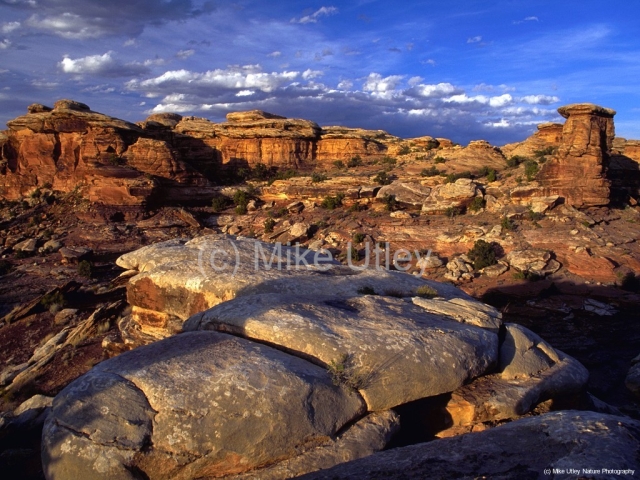
 Silent Pariah